









Traveler Information Messages (TIMS)
Intelligent Transportation Systems

Traveler Information Messages (TIMS)

As transportation systems evolve to support connected vehicle (CV) technologies, timely and accurate traveler information is critical for safety and mobility. Trihydro partners with state and local agencies, including state Departments of Transportation (DOTs), and infrastructure owners to design, implement, and maintain systems that deliver real-time roadway data—such as work zones, speed advisories, road closures, and incident alerts—directly to Roadside Units (RSUs) using standards-based message sets like SAE J2735 Traveler Information Messages (TIMs).

Backed by field experience and adherence to national standards, Trihydro supports both corridor-level and statewide CAV initiatives. Our end-to-end services include system integration, data exchange, maintenance, and training. Our proprietary software solutions, SDX® and CORVUS®, are central to our services. SDX is a reliable central message repository, facilitating easy access to accurate travel information for third-party systems. CORVUS, our Intelligent Transportation System (ITS) platform, automates the creation of standardized messages (compliant with SAE J2735 and J2540/2), ensuring seamless communication with connected vehicles and infrastructure. This integrated approach delivers critical real-time information, including traffic conditions, road closures, construction zone warnings, hazardous weather advisories, emergency vehicle notifications, and optimized alternative routes.

Our Capabilities:

  • TIM Encoding & Broadcast: Authoring and packaging messages using compliant J2735 structures for transmission over Cellular Vehicle-to-Everything (C-V2X) networks.
  • Map & Event Integration: Translating real-world road features, events, and geospatial data into digital formats such as MAP messages.
  • Situational Awareness Platforms: Integrating with systems like Trihydro’s Situation Data Exchange (SDX), Operational Data Environment (ODE), and RSU Managers for centralized message coordination.
  • Data Governance & Message Management: Establishing repeatable workflows for message interoperability, approval, prioritization, and versioning.
  • Field-to-Cloud Synchronization: Ensuring accurate and synchronized distribution of TIMs across RSUs, cloud-based platforms, and third-party applications.
SHANE ZUMPF
Trihydro Point of Contact
SHANE ZUMPF
Senior Vice President, Technology Service and Solutions
Work Zone Messaging
Intelligent Transportation Systems

Work Zone Messaging

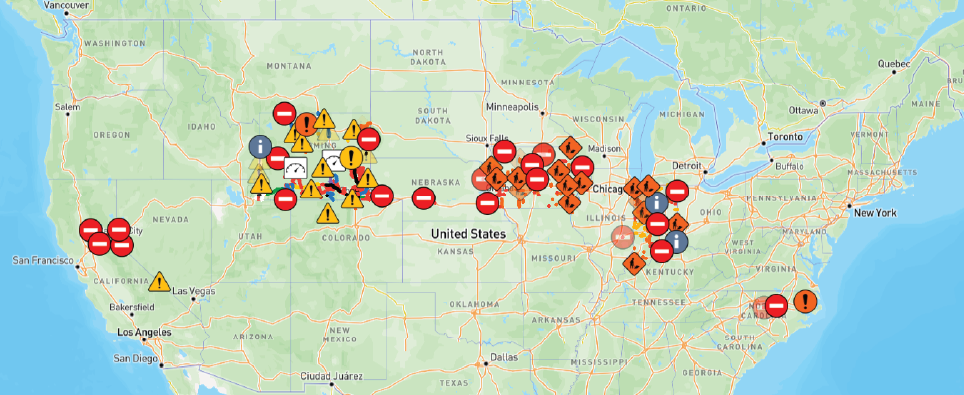
Recognizing the elevated risks work zones pose to both motorists and roadway crews, Trihydro delivers integrated solutions to enhance safety through connected vehicle technologies. Our Situation Data Exchange (SDX) platform serves as a national hub for aggregating Work Zone Data Exchange (WZDx) and Connected Work Zone (CWZ) standard data into a one-stop-shop portal for data consumers. Trihydro has also pioneered translating these work zone data feeds into SAE J2735-compliant Traveler Information Messages (TIMs).

These standardized messages can be transmitted to vehicles via roadside units (RSUs) or satellite communications, providing drivers with real-time, location-specific alerts as they approach and travel through active work zones. By bridging digital work zone data with CV infrastructure, Trihydro helps transportation agencies reduce crash risk, improve situational awareness, and support CAV readiness across their networks.

SHANE ZUMPF
Trihydro Point of Contact
SHANE ZUMPF
Senior Vice President, Technology Service and Solutions
Road Condition and Incident Detection
Intelligent Transportation Systems

Road Condition and Incident Detection

Unplanned incidents and adverse weather events can severely disrupt traffic flow and compromise roadway safety. Trihydro applies advanced Artificial Intelligence (AI) and Machine Learning (ML) techniques to transform road condition and incident detection, delivering real-time, actionable intelligence to Traffic Management Centers (TMCs) and connected vehicle systems. Our AI/ML models continuously analyze data streams from roadside cameras, environmental sensors, and weather sources to detect anomalies and patterns associated with hazardous conditions or roadway events—enabling faster and more accurate messages.

For example, Trihydro has developed a ML model with over 95% accuracy that processes live camera feeds to detect snow and surface conditions in real time. This automated detection not only reduces operator workload but also improves the accuracy and reliability of traveler information messages delivered to motorists. By refining condition detection at the source, Trihydro ensures that alerts and advisories transmitted via connected infrastructure are timely, precise, and trustworthy. These models can be adapted for various weather impacts and geographic regions, helping agencies enhance situational awareness, streamline communications, and improve roadway safety.

SHANE ZUMPF
Trihydro Point of Contact
SHANE ZUMPF
Senior Vice President, Technology Service and Solutions
Connected Vehicle (CV) Development and Deployment
Intelligent Transportation Systems

Connected Vehicle (CV) Development and Deployment

Connected and Autonomous Vehicle (CAV) technologies offer significant potential to enhance roadway safety and optimize traffic flow through real-time data exchange between vehicles, infrastructure, and transportation management systems. Trihydro brings proven, hands-on expertise in advancing CAV initiatives, highlighted by our role as the application development and systems lead for the Wyoming Department of Transportation (WYDOT) under the USDOT Connected Vehicle Pilot (CVP) program. Our work included authoring critical system documentation—such as system requirements, interface control specifications, and system design documents—while also providing software development direction and support for the USDOT’s Operational Data Environment (ODE). The ODE is a key open-source platform used to route, process, and manage connected vehicle messages at scale. Through this experience, Trihydro has demonstrated its ability to develop, deploy, and continue to support complex CAV ecosystems with robust, standards-based solutions.

SHANE ZUMPF
Trihydro Point of Contact
SHANE ZUMPF
Senior Vice President, Technology Service and Solutions
Statewide Transportation Data Exchange Platforms
Intelligent Transportation Systems

Statewide Transportation Data Exchange Platforms

As connected vehicle (CV) deployments and intelligent transportation systems (ITS) expand, transportation agencies require scalable, real-time platforms to break down data silos and manage the growing volume, velocity, and variety of data. Trihydro partners with state Departments of Transportation (DOTs) to design and implement Statewide Transportation Data Exchange Platforms that enable seamless data ingestion, integration, analysis, and distribution across jurisdictions.

Our platforms are built on robust Event Streaming Architectures (ESAs)—Apache Kafka and similar frameworks—that support the continuous flow of connected vehicle messages (such as BSM, SPaT, MAP, TIM), sensor feeds, and third-party data. These platforms are designed with flexibility and modularity in mind, enabling agencies to:

  • Ingest and standardize data from roadside units (RSUs), traffic management systems, field sensors, and weather stations
  • Process data in real time to detect anomalies, monitor performance, provide insights, and trigger safety alerts
  • Visualize data using customizable dashboards and geospatial tools to support operations, planning, evaluation, and public communication
  • Integrate third-party data such as Waze, transit feeds, and other state incident feeds
  • Distribute validated data across connected systems, traveler information services, and stakeholder dashboards

Trihydro’s approach emphasizes cross-agency coordination, standards-based interoperability, and future-proof design. By implementing these statewide platforms, DOTs gain a unified view of their transportation networks, break down data silos, and position themselves to take full advantage of emerging technologies such as autonomous vehicles, AI-based traffic prediction, and dynamic routing systems.

SHANE ZUMPF
Trihydro Point of Contact
SHANE ZUMPF
Senior Vice President, Technology Service and Solutions
Digital Infrastructure
Intelligent Transportation Systems

Digital Infrastructure

The future of transportation depends on the seamless integration of digital and physical infrastructure. As CAVs become more prevalent, agencies must equip their roadway systems with digital infrastructure capable of supporting real-time communication, data exchange, and automated decision-making. Trihydro delivers the tools, platforms, and expertise to help transportation agencies build and manage these critical digital layers.

At the core of our digital infrastructure offerings is Trihydro’s Situation Data Exchange (SDX) platform—a scalable, standards-based system designed to facilitate the exchange of connected vehicle messages and real-time roadway data. SDX enables state and local agencies to collect, standardize, and distribute key information across their Intelligent Transportation Systems (ITS) and connected vehicle environments.

SHANE ZUMPF
Trihydro Point of Contact
SHANE ZUMPF
Senior Vice President, Technology Service and Solutions
Traffic Signal Priority and Preemption
Intelligent Transportation Systems

Traffic Signal Priority and Preemption

Efficient traffic signal control is essential for the swift, safe movement of emergency responders, public transit, and other priority vehicles. Trihydro specializes in deploying advanced traffic signal priority and preemption systems within connected vehicle environments. Drawing from our work with the Colorado DOT, we integrate standards-based technologies—such as accurate and timely MAP and SPaT messages—to facilitate seamless signal transitions for high-priority vehicles. Our engineering expertise and real-time data analytics combine for successful deployment and performance in complex transportation networks.

SHANE ZUMPF
Trihydro Point of Contact
SHANE ZUMPF
Senior Vice President, Technology Service and Solutions

Contact me to get started