Cal-Wood Wildfire Rehabilitation
When the Cal-Wood Fire left more than 10,000 acres of burned land in its wake, Trihydro supported Boulder County Parks and Open Space with post-wildfire rehabilitation efforts to address flooding, debris flow, and erosion concerns.
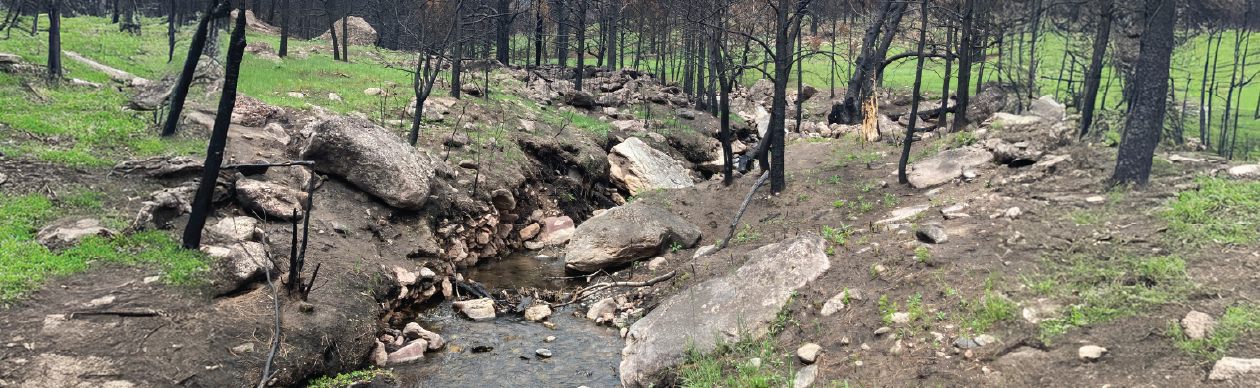
The Cal-Wood Fire began on October 17, 2020, and burned approximately 10,112 acres of private, county, state, and federal land within Boulder County, Colorado. The fire left approximately 46% of the burn area with “moderate to high soil burn severity,” leading to post-fire flooding, debris flow, and erosion concerns.
Trihydro supported Boulder County Parks and Open Space (BCPOS) in wildfire rehabilitation by designing and constructing mitigation measures to capture potential debris and mudflows in areas impacted by the Cal-Wood Fire. The project was funded primarily through the Natural Resources Conservation Service (NRCS) Emergency Watershed Protection Program, with BCPOS entering into a cooperative agreement with the NRCS to provide emergency stabilization and infrastructure protection to areas most at risk due to conditions created by the wildfire.
Gathering Data
The initial phase of the work included reviewing existing pre- and post-fire datasets to identify data required to support analysis and modeling efforts. Identified data included remote sensing and satellite-based imagery, land cover and vegetation mapping, digital elevation models, historical streamflow and precipitation, and soil information.
Site Assessments
Before beginning the design process, the project team conducted a series of site assessments to evaluate mitigation measure types and locations. One objective included qualitatively validating the initial hazard assessment data review results. The project team also undertook an assessment to identify locations where detailed modeling was required to inform mitigation measure designs.
Modeling Analyses
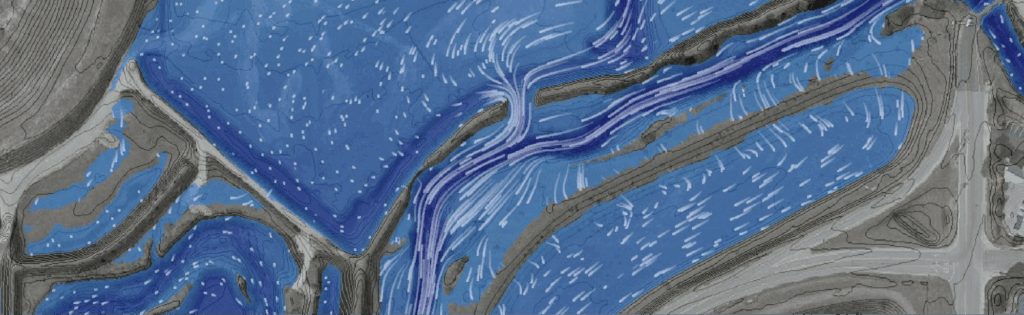
The team performed modeling analyses to yield the required design inputs at the appropriate spatial and temporal scales. We used debris flow modeling results to evaluate mitigation alternatives and size the final designs. Passive and active mitigation measures were considered, which included open debris flow control structures (e.g., rock check dams, lateral walls, deflection walls, berms, and barriers), closed control structures (e.g., debris racks, storage basins), and other sediment control structures (e.g., beaver dam analogs).
Design and Permitting
NRCS reviewed and approved the final designs. In addition to the final plan set and specifications, the team developed an operations and maintenance plan, a temporary construction stormwater pollution control plan, and a final design report. Trihydro also supported BCPOS with local and federal permitting processes, including a successful Letter of Map Revision application.
We worked collaboratively with BCPOS and other stakeholders throughout the project. Based on client and stakeholder feedback, the team adapted initial designs to achieve multiple objectives (e.g., debris and sediment control, ecological and habitat needs, access and maintenance requirements).
In addition, we made design adjustments during construction to better match the natural terrain and maximize the use of on-site, native materials. The team designed and constructed a floodplain restoration area in the lower Geer Creek watershed to reduce peak discharges and protect downstream infrastructure along Left Hand Canyon. Returning the area to its natural setting, including native wetland vegetation, provides long-term hydrologic and wildlife benefits.
Project Outcomes
- Created an adaptive design that targeted small, strategically located debris/sediment control structures that blended into the natural environment
- Eliminated the need for large, obtrusive, and more environmentally degrading structures downstream
- Designed new flash flood and debris flow control structures that mitigate peak flows and help prevent the movement of harmful debris and sediment
- Won the 2022 American Public Works Association Colorado Award